Commercial Off-The-Shelf (COTS) Space Components
In the new space economy—driven by mega-constellations like Starlink (thousands deployed, with approvals for 12,000+), Amazon Kuiper, and others aiming for tens of thousands of LEO satellites—demand has shifted from bespoke, low-volume spacecraft to modular, mass-produced smallsats and CubeSats.
This creates opportunities for standardized, interchangeable components that can be produced at industrial scale (electronics-like manufacturing lines) rather than hand-crafted. These niche (space-specific, high-reliability, radiation/vacuum-tolerant) products are required in huge volumes—one or more per satellite across thousands of units per constellation, plus multiple competing networks—leading to supply chain bottlenecks and scaling efforts by suppliers.
Below are the major categories of Corevision catalogue.
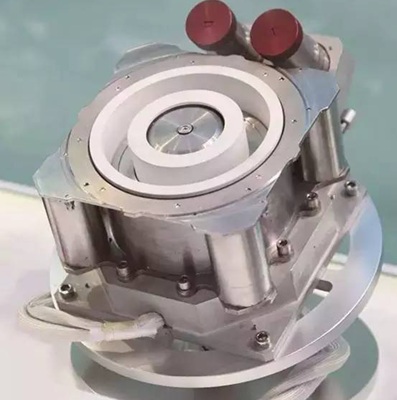
1. Electric propulsion units/thrusters (e.g., Hall-effect, ion, or micro-propulsion modules)
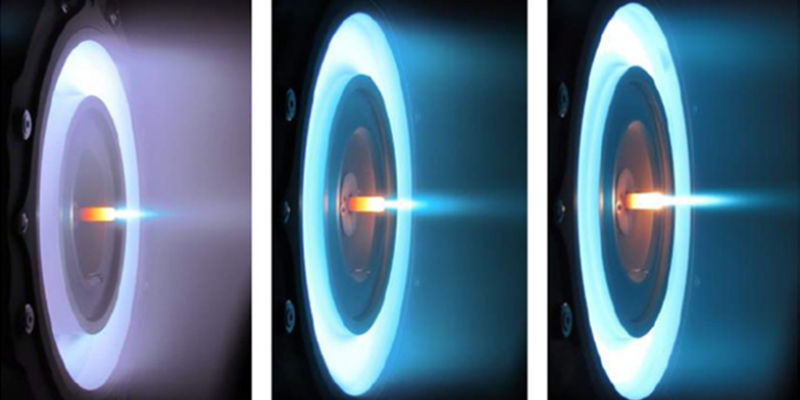
Corevision's electric propulsion units are modular, xenon- or krypton-compatible Hall-effect thrusters (HETs), gridded ion thrusters, or electrospray/micro-propulsion variants optimized for continuous low-thrust orbit maintenance and station-keeping against atmospheric drag, solar radiation pressure, and collision-avoidance maneuvers in crowded LEO shells (400–600 km altitude). A typical Hall-effect design uses a closed-drift magnetic field (200–300 G) to trap electrons and ionize the propellant, then accelerates the ions through a 200–400 V potential; this yields specific impulse (Isp) of 1,500–2,500 s, thrust per unit of 5–80 mN, input power 100–800 W, and total impulse lifetime >10,000–20,000 hours. Gridded ion thrusters trade lower thrust (1–20 mN) for higher Isp (>3,000 s) and efficiency (>60 %), while micro-propulsion modules (e.g., colloid or FEEP) deliver μN-level precision for attitude control on smaller buses. Corevision’s units feature standardized mechanical interfaces (e.g., 4-bolt mounting, MIL-DTL-38999 connectors), digital telemetry via RS-422/1553, and built-in cathode keepers for instant restart. The shift from bespoke to repeatable, high-TRL (8–9) production—achieved via automated plasma chamber testing and batch propellant feed system assembly—has driven unit costs down dramatically, supporting deployment cadences of hundreds of satellites per launch. Demand scales linearly: each satellite typically carries 1–4 thrusters for full redundancy and 6-DOF control, equating to tens of thousands of units per constellation rollout.
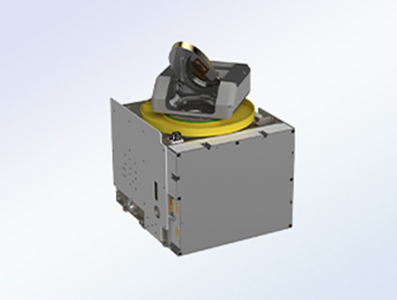
2. Optical inter-satellite link (OISL) terminals / laser crosslinks
Corevision's compact OISL terminals employ 1,550 nm fiber-laser transmitters (erbium-doped fiber amplifier boosted to 0.5–2 W optical power) paired with avalanche-photodiode or superconducting nanowire single-photon detectors for full-duplex, high-bandwidth mesh networking. Link performance routinely achieves 1–10 Gbps (scalable to 100+ Gbps with wavelength-division multiplexing) over 1,000–5,000 km ranges with bit-error rates <10⁻⁹ under nominal pointing. Coarse acquisition uses quadrant detectors and beacon lasers; fine steering employs fast-steering mirrors (FSM) or MEMS gimbals achieving <1 μrad RMS accuracy, supported by closed-loop PAT algorithms running at >1 kHz on the onboard processor. Each terminal weighs <5 kg, consumes 20–60 W average, and occupies <0.03 m³ volume, with radiation-hardened optics (borosilicate windows, active thermal control via heaters/thermistors). Corevision has standardized the module with plug-and-play Ethernet/IP interfaces and qualified it to ECSS-Q-ST-70C and NASA-STD-6001 for thermal-vacuum cycling (−40 to +60 °C), random vibration (14 g RMS), and radiation (TID >100 krad). Scaling challenges—already documented in SDA Transport Layer programs—stem from the need for 4–6 terminals per satellite to form low-latency, multi-hop meshes; total constellation demand therefore reaches tens of thousands of terminals, driving the transition to automated alignment calibration and hermetic fiber-optic assembly lines.
3. Phased-array antennas and RF front-end modules
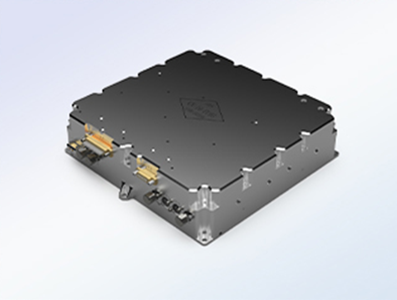
Corevision's electronically steerable phased-array antennas (active electronically scanned arrays—AESA) and integrated RF front-end modules operate in Ku-band (12–18 GHz downlink/uplink) or Ka-band (26–40 GHz) with no moving parts, delivering instantaneous beam agility <1 ms and >±60° field of regard. A typical flight unit comprises 256–1,024 gallium-nitride (GaN) high-electron-mobility transistor (HEMT) transmit/receive (T/R) modules per panel, each delivering 1–5 W RF output; total EIRP exceeds 40–50 dBW while maintaining >30 dB gain and <2 dB noise figure. Beam-forming is performed digitally via FPGA or ASIC with amplitude/phase control to 8–12 bits, enabling simultaneous multi-beam operation (up to 16 independent beams) for user links or gateway handovers. The front-end integrates low-noise amplifiers (LNA), up/down-converters, and power amplifiers on a single multilayer RF PCB with thermal vias and heat pipes for dissipation of 50–200 W. Corevision’s standardized form factor (flat panel ~0.5–1 m², mass <8 kg) mounts directly to the satellite bus via standardized waveguides or coaxial interfaces and supports full redundancy (dual-string power supplies). The move to electronics-style mass manufacturing—leveraging commercial GaN foundry processes with space-grade screening—has reduced unit cost by >70 % while maintaining MIL-STD-461 EMI/EMC compliance. Every LEO broadband satellite requires at least one (often 2–4 for full hemispherical coverage), scaling demand directly to tens of thousands of arrays per major network.
4. Space-qualified solar panels / photovoltaic arrays (often GaAs triple-junction cells)
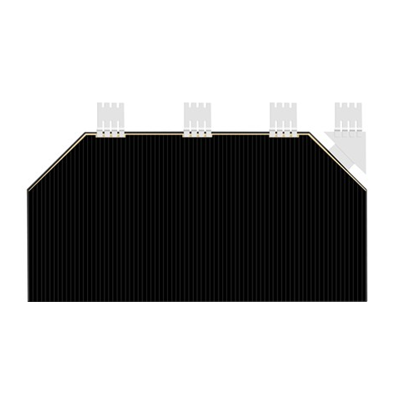
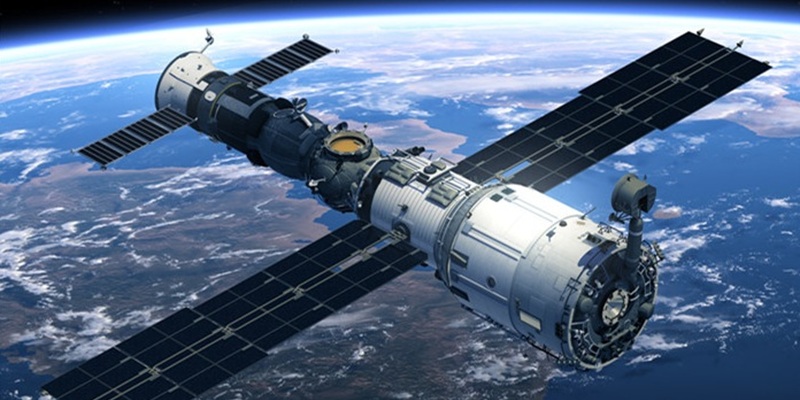
Corevision's standardized photovoltaic arrays utilize triple-junction GaAs (InGaP/GaAs/Ge) solar cells with beginning-of-life (BOL) efficiency of 29–32 % under AM0 (1,367 W/m²) illumination. Each cell includes a 150–300 μm cerium-doped microsheet coverglass for atomic-oxygen and radiation protection, achieving end-of-life (EOL) degradation <15 % after 5–7 years in LEO (typical fluence 10¹⁵ 1-MeV electrons/cm²). Rigid or deployable panels are sized for smallsat buses (0.5–5 m² deployed area, generating 100–800 W at 28–50 V bus voltage via integrated MPPT regulators). Deployment mechanisms use high-reliability spring hinges or carbon-fiber tape-spring booms qualified to >10,000 cycles; wiring harnesses employ polyimide-insulated silver-plated copper with redundant strings and blocking diodes. Corevision offers interchangeable mechanical/electrical interfaces (e.g., 8–12 bolt patterns, standardized power connectors) across mission classes. With annual satellite production already exceeding 1,000–2,000 units and accelerating, every spacecraft requires one primary array (plus body-mounted cells for safe-mode power), driving total demand into the hundreds of thousands of cells and dozens of complete arrays per constellation. Automated cell-stringing, laydown, and large-area vacuum deposition have transformed this from low-rate custom work into a repeatable, high-volume staple.
5. Radiation-hardened semiconductors / on-board processors
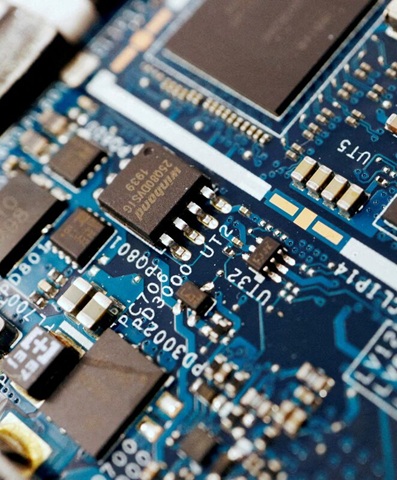
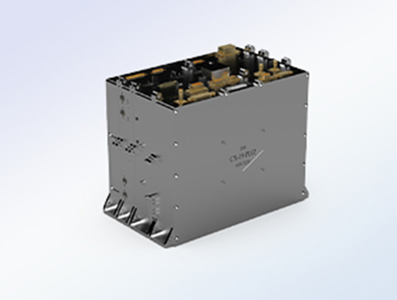
Corevision's rad-hard semiconductor families include total-dose-hardened (TID >100–300 krad(Si)) CPUs, FPGAs, and memory devices fabricated on silicon-on-insulator (SOI) or rad-hard-by-design (RHBD) processes. Representative processors deliver 100–500 MHz clock speeds (e.g., 32/64-bit RISC-V or ARM cores), 1–8 GB DDR3/4 memory with EDAC/SEU scrubbing, and power consumption <3–10 W. Key mitigation techniques encompass triple modular redundancy (TMR), error-correcting codes (ECC), watchdog timers, and latch-up immune I/O. Devices are screened to MIL-PRF-38535 Class V or ECSS-Q-ST-60C, with single-event effect (SEE) cross-sections <10⁻¹⁰ cm²/bit and heavy-ion LET threshold >60 MeV·cm²/mg. Standardized form factors (e.g., 6U VPX or mezzanine cards) support plug-and-play integration for attitude determination & control (ADCS), command & data handling (C&DH), and payload processing. Corevision also offers COTS-adapted variants with software-based mitigation for cost-sensitive missions. Every satellite requires at least one primary processor (plus hot/cold spares), making these components universal across constellations; the transition to repeatable wafer-level testing and automated assembly has enabled supply at the scale of tens of thousands of units while maintaining flight heritage on >100 prior missions.